Sunday, September 3, 2017

Shoo-Fly Pie

Remember, I was supposed to tell you about 2 things? The second is a shoo-fly pie. My brother texted me to say I should make a shoo-fly pie. Twice, so I know he's serious. My semi-flippant response was I'd make it just before washing the sheets and towels. They need washing so it's time to make myself a shoo-fly pie.

This recipe is a bit more difficult than the previous entries. Normally, I start with a recipe and see what comes out. This time, there's no recipe. I've searched all my cookbooks and I found just one from 1965.  So I turned to the internet.

Whew. There's a lot going on with this recipe. Originally called Centennial Cake, it was a molasses based cake made to celebrate the centennial signing of the Declaration of Independence. To make it easier to eat, it was placed in a pie crust. But the name shoo-fly itself is either named after a brand of molasses or because you had to shoo the flies away from the molasses pie after baking. It comes in two varieties, wet-bottom and dry-bottom. Wet-bottom has a cake like texture at top and a custard-like consistency underneath. Dry-bottom, as you can imagine, is fully set top to bottom.

As for how to make it, there are recipes here, here, here, here, and here. But I'm not going to make any of them. Since I prefer ambiguity in my old recipes, I'll use a recipe from 1915 from Mary At The Farm And Book Of Recipes Compiled During Her Visit Among The "Pennsylvania Germans" (link).


For the most part this is straightforward except for the "small sized pie-tins." I got a 6 inch pie pan; it's small, so it should work, right? I'll try it. Also since I'm only making one pie, I'll divide everything by 3. Lastly, I don't have lard so I'll substitute more butter. Here's what I ended up doing:

Shoofly Pie
Crust:
1/3 cup + 1 T butter
pinch salt 
1 cup flour
3 T water

Work butter into salt and flour until crumbly. Add water by tablespoons just until dough begins to come together. Split dough into halves and gather into balls. Roll out half of dough between 2 pieces of waxed paper. Transfer to pie pan and crimp edges.

Pie Filling:
1 cup flour
1/3 cup brown sugar, packed
1/2 cup butter
1/3 cup molasses, unsulfured type
1/3 cup hot water
1/3 teaspoon baking soda
1/3 teaspoon vinegar

Preheat oven to 375 F. Combine first 3 ingredients in large bowl with hands until crumbly. 

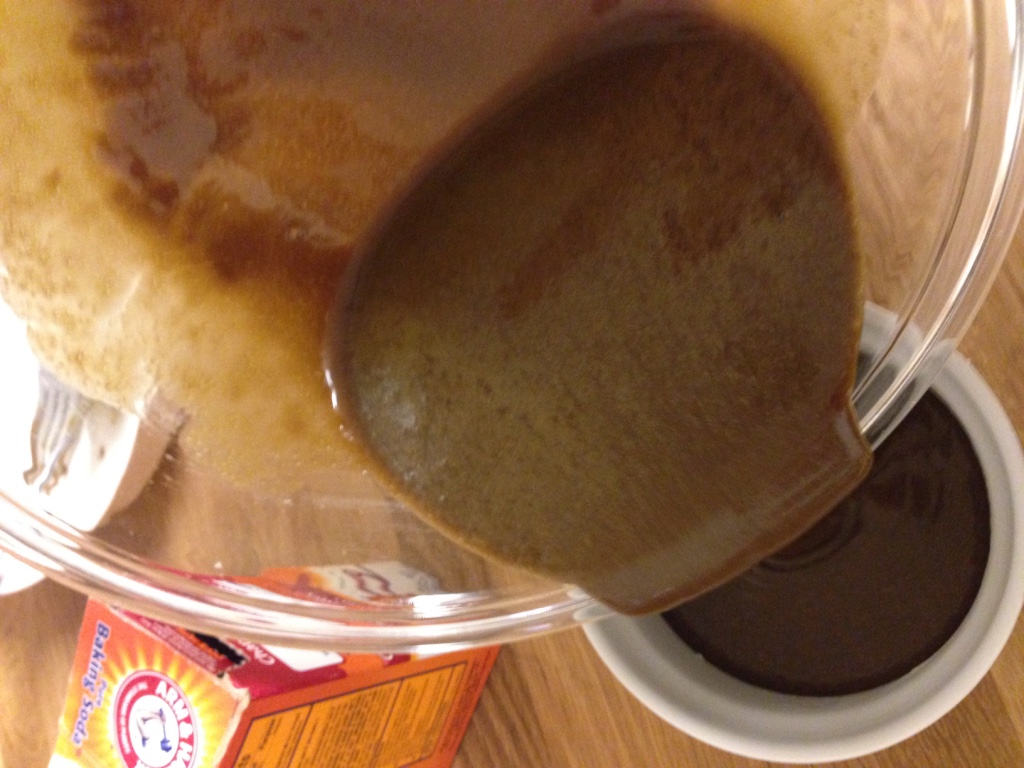
In small bowl, mix together molasses and water. In a very small bowl, combine vinegar and soda, pour into molasses mixture. Stir. Pour into pie crust. Sprinkle on top as many crumbs as you can fit (about half). Bake about 35 minutes or until puffy and mostly set. Cool completely.

(For those curious about what I did with the other half of the pie crust dough and crumb mixture, I made a galette filled with crumb mixture. It was good, but a bit dry.)


Well, what have I learned? I have learned that a small pie tin is probably a normal sized because all my crumbs didn't fit. I've also learned that this version is a physically unimpressive specimen of a pie. Its a bit ugly, being a sort of mottled brown and sunken in the center. Taste-wise, its good but a bit one dimensional having only molasses for flavor. But I like molasses so I think this is a plus. I suspect I've ended up with a wet-bottom version as the texture is a bit fudge-y at the bottom.


Wednesday, August 30, 2017

Inverse Sundae

It's been forever! Sorry. But I'm back (for now) and I'm on a mission to tell you about two things. The second will have to wait because I haven't made it yet. But it's on my list of things to do but it's a long list. It is, however, sitting above washing the linens so hopefully soon. Anyway, the first thing I wanted to tell you about... well, it's not old (probably). But I made it and it's good enough to share. The title may be a good hint. OK, I'll tell you: it's vanilla sauce.


Now for the meandering story to get to that. Shortly before marrying Beta Taster, I asked every family member and friend I had for their favorite recipes. They delivered magnificently. And I've still not cooked every good thing they've shared. My list of things to do and things to cook are equally long.

Back to my story. So, this past weekend, I went to the farmer's market and there was some rhubarb. It wasn't the sad and limp end-of-season rhubarb that you would expect in mid-summer. It was fresh and firm. So I bought 2 stalks. The woman I was chatting with as I bought them asked what I was going to make with it. Answering without thinking, as I sometimes often do, I said probably a rhubarb cake as you can only take so much rhubarb in pie form (with or without strawberries) in a given rhubarb season.

When I got home, I searched my recipe database for rhubarb and there was a Special Rhubarb Cake from Cousin Gayle. Now I didn't want to be a liar, even about something as minor as what I'm going to do with my fresh produce. So I gathered up the ingredients and realized I don't own a 9 inch square pan. But since I didn't want another baking pan that I'd only occasionally use, I decided to use my 2 rarely used 9-inch round cake pans and just make my cake height shorter and figure out something to put between the layers. I toyed with the notion of strawberry preserves but decided to make a rhubarb filling as the best rhubarb accompaniment is yet more rhubarb.

Anyway, that cake was delicious. I ate more than half and my only regret is that I had to share the whole thing with Beta Taster. But the real star of the show was the vanilla sauce that goes on top. I finished the cake two days ago but some of the sauce remained. And I got to thinking, what else can I put this on since I ate the cake it was supposed to go on? Well, if vanilla ice cream and chocolate sauce is a sundae, then chocolate ice cream and vanilla sauce is an inverse sundae. Let's do it.

Now I'm not going to give you a recipe for a sundae. You can make one as you like best. But I humbly submit that chocolate ice cream, this vanilla sauce, perhaps some whipped cream, and fresh berries makes a luxuriant dessert, even when it's not a Sunday.


Special Rhubarb Cake
Cake:
1/2 cup butter softened
1 cup sugar
1 egg
2 cups flour
1 teaspoon baking powder
1/2 teaspoon baking soda
1/2 teaspoon salt
1 cup butter milk
1 stalk rhubarb, chopped fine-ish

Filling:
1 stalk rhubarb, thinly sliced
1/3 cup sugar
1/4 cup water
approximately 1/2 teaspoon pectin (I didn't measure and I'm not sure if necessary)

Sauce:
1/2 cup butter
3/4 cup sugar
1/2 cup evaporated milk
1 1/2 teaspoon vanilla

For cake: Preheat oven to 350 F. In a large bowl, cream butter and sugar until light and fluffy. Beat in egg. Combine flour, baking powder, baking soda, and salt; add to creamed butter mixture alternating with buttermilk. Beat just until moistened. Fold in rhubarb. Split between two greased 9 inch round cake pans. Bake until done. (I forgot to time this step.) Cool in pan 5 minutes then turn onto a baking sheet and let cool entirely.

For filling: Meanwhile, combine rhubarb, sugar, and water in small saucepan. Cook over medium heat until rhubarb breaks down entirely and almost all water is boiled off (about 10 to 15 minutes). Add pectin and continue to boil until thickened. (I'm not sure pectin was needed.) Let cool completely.

Build your cake. Spread rhubarb filling between layers.

For sauce: Melt butter in saucepan. Add sugar and milk. Bring to boil; cook and stir 2 to 3 minutes or until thickened. Remove from heat. Stir in vanilla. Serve over cake (or anything else you can think of).


Monday, December 21, 2015

Butter Scotch

Cooling in the pan.

Sorry for the scarcity of posts lately, Faithful Reader. This post comes to you from my parent's kitchen. And since it's not my house, let's see how big a mess I can make. (Just kidding, Mom and Dad. I'll clean up.) I thought for Christmas I'd attempt homemade candy. This one looks simple and detailed enough to make without having to know exactly what I'm doing.

Three ingredients required.

I've avoiding making candies at home because it requires precise timing and candy thermometers are highly recommended. I lack both. I also find the whole process of cooking sugar to be nerve-wracking. I'm petrified I'll create such a burnt mess, my pans will never clean up again. But over the Thanksgiving break, I made caramel (twice! but the recipes were modern) and since I didn't destroy my pans then, I think I may be able to do this too.


Measuring the brown sugar, then boiling the butter and brown sugar.

To start with, the recipe only required 3 ingredients: brown sugar, butter, and "a good pinch of cooking soda" (which I think is more commonly known as baking soda).  And I suspect "boil to the crack" means crack stage. I guessed and tried a hard crack.


Results: It's rather difficult to go too wrong with sugar and butter as the main ingredients. I tried following the recipe exactly as written, but I wasn't sure and stirred the brown sugar and butter as it was boiling so that may have thrown off the texture. The texture was pretty grainy whereas I was expecting something glossy and smooth.  For those that are curious, 4 ounces of butter is 8 tablespoons and I added perhaps a quarter of a teaspoon baking soda. If I make this again, I try not stirring and perhaps only boiling to the soft crack stage.

My helpers. 

Tuesday, December 1, 2015

Tomato Soup


The Beta Taster and I are only halfway through our molasses cake, so no dessert this time. I'm also in a post-Thanksgiving cooking doldrums, so nothing complicated either. And our weather has turned cold so I'll try soup.  I'm curious about this tomato soup because when I eat tomato soup at home it's either canned or boxed. I like boxed, but I always miss that slight metallic tang from the canned. Since my tomatoes are starting out canned, perhaps I'll get that metallic tang I miss.

I think copyright laws wear off after 50 years or so.

I followed the above recipe fairly closely but decided to use crushed rather than diced tomatoes because I prefer the texture. And it's a pretty ugly color (a grayish-pink); the first picture doesn't do it justice. Perhaps it's because I used skim milk, sorta like how coffee with skim milk is a icky grey but coffee with cream is beige? It tastes good but the texture isn't as smooth as I would like. Evidently I wanted the can of pureed tomatoes. And now I know the difference between them.

Simple ingredients. Yay!

The addition of baking soda was strange and I presume it's to cut down the acidity of the tomatoes. I followed the instructions to add it but I think I might have liked it more without soda. The flavors were a little flat without a slight acidic kick. Overall though, I liked it a lot and I plan on making it again. Thanks for tuning in, Faithful Reader.

Friday, November 27, 2015

Minnie's Molasses Cake

Minnie's Molasses Cake

[Apropos of nothing: besides molasses, what's brown and sticky? (Answer at bottom.)]

Finished product

So last week we made some Creamy Sauce and now I've got quite a lot of it (since I didn't scale back on the recipe) and need something to put it on. But since I think I've been giving undue emphasis to Fannie Farmer, it's time to go back to my other favorite, The Sweet Home Cook Book. I went looking through the pudding section since Beta Taster said perhaps a chocolate pudding would be more to his taste than molasses. Alas, no chocolate pudding exists in there.

Slightly blurry ingredients

Remembering the texture, I thought perhaps a cake? No chocolate cake either. So back to molasses for the flavoring because I like molasses and it goes well with the sauce.  (Sorry honey, no chocolate this time.) I think Minnie's Molasses Cake might be good. I also like it because it tells me the amount of flour to add. (A good many in there don't.) But so I'm not spoiled, it gives nothing about baking it. Let's get to guessing.


Minnie's Molasses Cake
(Adapted from The Sweet Home Cook Book, unknown date)

1 cup brown sugar
1 cup molasses
1 cup milk
1/2 cup butter
1 egg
1 t soda
2 1/2 cup flour
1/2 t nutmeg

1. Cream butter and sugar.
2. Mix in egg, milk, and then molasses.
3. Stir in dry ingredients.
4. Pour into a 9 inch greased cake pan.
5. Bake 350 F for about 1 1/4 hour or until test comes out clean when inserted in middle.


Results:
Oh my, that's full cake pan. Perhaps it should make two cakes. But it didn't spill over and make a mess of the oven, so there's that. Also the cake didn't rise properly. It could be that there was too much leavening. Or maybe I didn't cream the butter and sugar well enough. Either way, it's not too pretty but it taste quite good. A lot like gingerbread only much thicker. We're slowly working our way through it. It seems to last quite a while too. It's been sitting in a cake dome at room temperature for about the last four days; it has stayed moist and not spoiled yet. Overall, it's a good recipe and I'll probably make it again.

[A stick.]

Wednesday, November 18, 2015

Honeycomb Pudding

Honeycomb Pudding
Honeycomb pudding.

There was a time when I was younger and even stupider. I stopped by a roadside stand selling honey with its comb. I was so excited to get such a rare culinary treat as I was convinced honeycomb must be. I remember fishing out the comb and taking a bite. For a few seconds, all I tasted was honey and that was good. And then I was left with the beeswax comb and I did not like that taste at all. I don't remember what happened to that jar of honey and its comb.

What you'll need.

A quick Google search informs me that honeycomb is indeed edible. Proving that I don't learn from past experiences, I wonder if I'd like it now. Next time I find some, I'll try it.


Strangely enough, honeycomb pudding calls for neither honeycomb nor honey. So I'm not sure how the name came about. Perhaps making it will provide some insight. The ingredient list is basic which means I won't have to go hunting for the odd ingredient.

Beating cream for the sauce.

Honeycomb Pudding with Creamy Sauce
(Adapted from Fannie Farmer's What to have for Dinner, 1905 edition)

1 3/4 cup sugar
1 cup flour
1 cup molasses
1/2  cup butter
1/2 cup milk, warmed to lukewarm
1/2 teaspoon baking soda
5 eggs
3/4 cup heavy cream
2 T sherry

Pudding:
1. Mix flour, 1 cup sugar, and molasses in a small bowl.
2. Melt butter in milk in microwave, add soda.
3. Combine mixtures and stir thoroughly.
4. Add 4 eggs, well beaten.
5. Turn into buttered dish and bake 375 until pudding sets (~30-45 minutes).

Creamy Sauce:
1. Beat remaining egg white until stiff, adding remaining 3/4 cup sugar gradually.
2. Beat remaining yolk until thick and "lemon colored". Beat into egg white.
3. Beat cream and sherry until stiff.
4. Fold mixtures together.
5. Serve atop pudding.

Not the prettiest but certainly tasty.
Results:

First off, I quartered the pudding recipe from what is listed above because I thought it might make too much. And it would have. We got 3-4 servings out of it. I did not have the sauce because I don't know how to halve and egg.

I like it. I may have made the pudding incorrectly but the texture reminds me of a slightly heartier soufflé. But tasting like molasses. The creamy sauce is delicious and I take back every nasty thing I ever thought or said about sherry. It works lovely here and adds a nice spiciness to the otherwise very sweet creamy sauce. Beta Taster however was less impressed. He described the flavors as "midwestern" and thought perhaps there was a reason this recipe isn't a staple anymore.  I say more for me. One last thought, it's best fresh but can keep in the fridge for at least 2 days.

Monday, November 2, 2015

Emergency Soup

I've had my eye on this recipe for quite a while. As I was leafing through my Fannie Farmer's What to Have for Dinner, I came across an emergency meal section. The first question that came to mind was: what sort of emergency calls for dinner? (Dinner in this case consists of soup, salmon, fried potatoes,  peas, and dessert. Perhaps this is the sort of emergency I need in my life.)

Emergency Soup

Upon reflection, I suspect what Fannie means is unexpected guests dropping in. Nowadays, I'm more likely to suggest just going out to dinner when the guests show up, and I suspect most people are too. But perhaps then, there were fewer restaurants to go to, so people just had to cook for those unexpected guests.
Salt not needed but I forgot to show the flour and water.

The preparation looks quite straightforward and so does the ingredient list with the exception of "beef extract." It's evidently still a thing you can buy. But since I didn't see any in the grocery store, I bought beef bouillon cubes and will use those here and I'll have to guess how many to use.

Milk and flour

Emergency Soup
(Adapted from Fannie Farmer's What to Have for Dinner, 1905 edition)

3 cups boiling water
4 beef bouillon cubes
1 1/2 T flour
3 T milk
2/3 cup cream
1 sprinkle of cayenne pepper
1 sprinkle of black pepper

Pour water in sauce pan. Bring to boil, pour over bouillon cubes and stir to dissolve. Place flour in now empty sauce pan. Add milk and stir to mix. Try to make perfectly smooth. Pour beefy water back into pan and stir. Bring to boil. Stir in cream and peppers. Bring to boil.

Results:
What a strange soup. It's creamy and a little spicy. (Thanks, cayenne!) I quite like the creamy and spicy contrast. But the soup is only faintly beefy.  I was expecting, well I have no idea, but perhaps a bit more beef flavor. Perhaps I should have used beef extract. Also it really didn't need any salt but that may be the brand of bouillon cubes I used.  Feeds about 4 in smallish proportions. I probably won't make this again but I don't regret trying it.

Cat helper.

Sunday, October 25, 2015

Onion Soufflé

It's been nearly a year and I'm sorry to have kept you waiting, Faithful Reader. I'll try to do better this time around for you.

All cooked and ready to eat


I have a confession, Faithful Reader: I've never tried making a soufflé. My impression is that they are persnickety. And I've never eaten one so I have no idea what it's supposed to taste like. But I'm not going to let either of these things deter me. I'm intrigued by an onion soufflé I came across in Fannie Farmer's What to Have for Dinner so let's try making it.

Ingredients needed

The directions start off a bit vague: boil onions, rub through a sieve to get 1 1/4 cup onion pulp. This evidently takes about 2-3 medium onions. I boiled 3 onions and now have extra onion pulp which I have no idea what to do with. (Suggestions welcome!) But other than the onion amount, the ingredient list was detailed enough to.

Onion Soufflé:
(Adapted from Fannie Farmer's What to Have for Dinner, 1905 edition)

Ingredients:
2-3 medium onions
4 T butter
4 T flour
1/3 cup cream
3 eggs, separated

Instructions:
1. Heat a medium saucepan full of salted water to boiling.
2. Peel and slice into thick rounds 2 to 3 medium onions. Boil onions until soft. Reserve cooking liquid.
3. Puree onions in food processor until pureed.
4. Melt butter in medium sauce pan, add flour and cook until pale brown.
5. Pour in 1/3 cup cooking water, cream, and onion puree. Stir.
7. Stir in egg yolks.
8. Beat egg whites until stiff.
9. Fold whites into onion mixture.
10. Turn into buttered dish and bake at 350 F for 25 minutes. (N.B. My oven runs cold and it took 50 minutes for me.)
11. Serve immediately.

A texture I like and cannot describe.

Results:
It's good. Texture-wise: sorta like really fluffy scrambled eggs but with a nice onion-y flavor. Or as I told Beta Taster, "it's a bit like grits but without the grain." And serves about 3 to 4 people. Also, soufflés are not as persnickety as I imagined. In fact, it was a bit of a let down. I'd braced myself for a difficult recipe and instead found something well within my cooking capabilities. I'm sure there's a life lesson in here somewhere. Probably about facing down things that you think are intimidating. Thanks for tuning in.

Tuesday, October 28, 2014

Pudding!!!

Oh, squee! It's here! My pudding mold! It's so cute! I can't wait to use it! I feel so properly Dickensian. Truth be told, I'm not fond of Dickens. But Agatha Christie, whose work I am fond of, wrote a short story about Hercule Poirot called "The Adventure of the Christmas Pudding." It's quite worth the read; a cute little story about English Christmas traditions, with midnight Mass, Christmas dinner (complete with pudding), playing in the snow... Right, I've gotten sidetracked (as usual).

Pudding mold.

I'm going to make a steamed pudding and it's going to be pudding-y. Well not pudding, as in the custardy dessert. Hmm, actually I'm not sure what this will be like. Judging from  my Boston brown bread, it'll be, um, cake-y? Perhaps I should lower my expectations and hope for edible? Besides what sort of pudding should I make? Plum pudding? Figgie pudding? Perhaps I should play it safe(r) and go with a chocolate pudding?

A soft dough.

¯\_(ツ)_/¯ Meh, I should stop dithering and look at recipes.

Dough rolled out.

Cranberry pudding! I admit I'm choosing this one because the Beta Taster found some cranberries that have been sitting in the freezer for nearly a year. Perhaps I ought to do something with them. Besides I hate seeing food go to waste. (They've been in the freezer so they're still good, right?<Pause, while I go try one.> Tastes ok to me. Onward!)

Pudding rolled up.

As usual, we going to have to scale back on the recipe. I got a baby mold that only holds 2 cups. So scaling will be pretty drastic. The recipe starts with a quart of flour or 4 cups. Perhaps I'll try one-eighth-ing the recipe. Let's see what happens.

Steaming.

Cranberry Pudding
(Adapted from The Sweet Home Cook Book, date unknown)
Serves 2-3

1/2 cup flour
1/8 teaspoon baking soda
1/4 teaspoon cream of tartar
1/4 cup milk
1/2 cup cranberries
~1 tablespoon sugar

1. Sift together first 3 ingredients.
2. Add milk to make soft dough.
3. Roll out to a thin oblong.
4. Sprinkle with cranberries and sugar. Roll up like a cinnamon roll.
5. Place in well greased mold.
6. Steam 1 1/2 hours.

Cranberry pudding.

Results: Well, hmm. It tastes a bit like a biscuit with cranberries. It's good though. And now I want to make another. It may need more cranberries next time. Also, it tasted a bit bread-like. I may have gotten too much flour in the dough when I was rolling it out since I didn't want it to stick to the counter. Perhaps I should have simply stirred in the cranberries and foregone the rolling out of the dough. I'll do that next time. The Beta Taster wasn't too impressed. He said it's a bit bland. But I had no trouble eating it.

Finished product.

Sunday, October 12, 2014

Brandy Snaps

Hello again, faithful reader.  I managed to get a cold and spent the past week either sleeping or working, but now that I'm better... Let's continue playing with desserts. Cookies this time, now that our heat wave has snapped. At least, I think they'll be cookies. Or cookie-like. Or perhaps not at all cookie-esque.

Brandy snaps!

These brandy snaps have no leavening so they won't rise but otherwise the recipe looks cookie-ish. Also, no brandy. I'm not sure why they're called brandy snaps then. Should one eat them while drinking brandy? And there is plenty of molasses and ginger. Do ginger snaps taste good with brandy? Alas, no brandy in the pantry. It's up to you, Faithful Reader, to let me know.

They don't require many ingredients.


Brandy Snaps
(adapted from Fannie Farmer's What to Have for Dinner, 1905 edition)

1/4 c molasses
2 1/2 T butter
1/2 c flour, scant
1/3 c sugar
2 1/4 t ground ginger

1. Preheat oven to 350 (or whatever your definition is of a moderate oven) and line 2 baking sheets with parchment paper.
2. Mix flour, sugar, and ginger together in a bowl.
3. Place molasses in a small saucepan and bring to just below a boil.
4. Add butter, stir until melted.
5. Stir in dry ingredients.
6. Drop by spoonfuls onto cookie sheets 3 inches apart. (about 1 tablespoon makes a cookie about 2 1/2 to 3 inches in diameter.)
7. Bake 9 to 10 minutes.
8. Let cool on sheet.

Brandy snap dough.

Results: I made lace cookies! I've never tried making them before. These're good, especially if you like ginger. They're also a bit buttery. Next time, I'll cut down on the butter, perhaps to 1 1/2 tablespoons. And of course, I halved the recipe. The next day they have a sort of candy/crunchy consistency, which I like. Yield = 18 3-inch cookies.

Sunday, October 5, 2014

Peach Cream

My calendar informs me that it is fall. But the weather is awfully hot today. So I'll consult my recipes for something that doesn't involve the use of the oven or stove. And of course, since we had our greens last time, we can now move on to dessert. (Yay!)

Peach cream.

According to Fannie Farmer, Peach Cream is to be served for company and formal dinners. The recipe doesn't look particularly fussy, so I'm downgrading it to serve whenever I feel like. And I feel that today, a hot day in early October, is its day in the sun, metaphorically speaking, although you could eat this in the sunshine, if you so wished.

Peach puree.

But I did make several changes. First off, we're halving this. Next, I'm supposed to rub a can of peaches through a sieve. I'm going to use my food processor instead. While I'm not quite up on my history of kitchen appliances, I suspect the purpose of rubbing things through sieves is to make a puree and using my food processor is quicker and easier. Also of note, I'm assuming can sizes haven't changed (about 15 ounces or so).

Peach puree with lemon juice, sugar, and wine.

Last major change, I'm not using the sherry called for. I'm substituting a semi-sweet white wine because the sherry I have is old and cheap and tastes a little off. Besides I've never managed to acquire a taste for it and I don't want it in my peach cream. (I can't believe people willingly drank it.)

Peach Cream
(modified from Fannie Farmer's What to Have for Dinner, 1905)

1/2 can peaches with syrup
1/2 cup sugar
juice from 1 lemon
1/4 cup semi-sweet white wine
1 cup cream
dash salt

1. Puree peaches with syrup in food processor, place puree in bowl.
2. Add sugar, lemon juice, and wine, stirring occasionally until sugar is dissolved, about 15 minutes.
3. Place in freezer and "freeze to a mush." This takes about 1 1/2 to 2 hours, stirring occasionally.
4. Whip cream.
5. Add cream and salt to peach mixture. Stir.
6. Freeze, stirring occasionally, until desired consistency.

About ready to freeze.

Results: I think I made peach sherbet and it's delicious. The Beta Taster won't get much of this. The whole process went smoothly but made a lot of dishes. (The food processor for the peaches and the stand mixer for the cream. OK, not that many dishes, but I'm feeling lazy.) I'm glad I substituted wine for the sherry. The wine flavor was subtle but agreed well with peaches. For the second freezing, at an hour and a half, the consistency was about that of half melted ice cream and that was where I thought it best. But not being able to eat all of it, I let it keep freezing and by 4 hours, it was pretty well frozen but still scoop-able. In case you're wondering, there are 4 to 6 servings in this.

Thursday, October 2, 2014

French Dressing

You might have noticed a trend while following my blog, faithful reader. You might think the only foods I like are desserts and meats and perhaps carbohydrates. While I do enjoy all those things, especially dessert, I also like fruits and vegetables. I prefer my fruits and vegetables fresh or steamed or roasted to crisp-tender (if vegetables, I'm fairly sure I'm not enthusiastic about a steamed plum nor a roasted banana). But I confess I've been avoiding the cooked vegetables after reading how long I should boil them (30 minutes for green beans, e.g.). They read more like vegetable mush with butter. But I am willing to try a salad dressing since the lettuce won't be boiled into submission.

Ingredients needed.

French salad dressing is usually a reddish color usually tasting a bit like tomatoes and on the sweet side. Wikipedia informs me that Worcestershire sauce and paprika are also key ingredients. This recipe is more of an oil and vinegar mixture with a little bit of onion juice. And I served it on a bed of iceberg lettuce (because it was on hand) with a red bell pepper (which I grew in my garden) because iceberg is a bit bland on its own. The recipe was vague on the type of vinegar to use so I used red wine vinegar. Also it calls for onion juice. I'm guessing you get onion juice by microplaning an onion and using that. Even if that's not how to get onion juice, that's what I'm going to do.

French Dressing ala 1905.

French Dressing
(adapted from Fannie Farmer's What to Have for Dinner, 1905)

1/4 teaspoon salt
1/8 teaspoon pepper
1 tablespoons vinegar
2 tablespoons olive oil
drop onion juice

1. Whisk all ingredients together and serve on lettuce.

Results: Not too bad. Mostly it tasted like salty oil and vinegar. Next time I'll cut back on the salt but add more onion since I didn't notice any onion flavor. I'll also cut back on the olive oil; it felt a bit oily. Also, it certainly wasn't the French dressing you see in the grocery store.

Yum.

What I really like about trying these recipes is that they challenge my notion of what-ever-it-is I'm making. Most of the time, the texture and/or flavor is different from what I expect based on modern recipes. And it's fascinating to observe how tastes have changed. The idea of French dressing bring to mind a certain expectation which may or may not be similar to the expectation it raised a century ago.